EN
EN


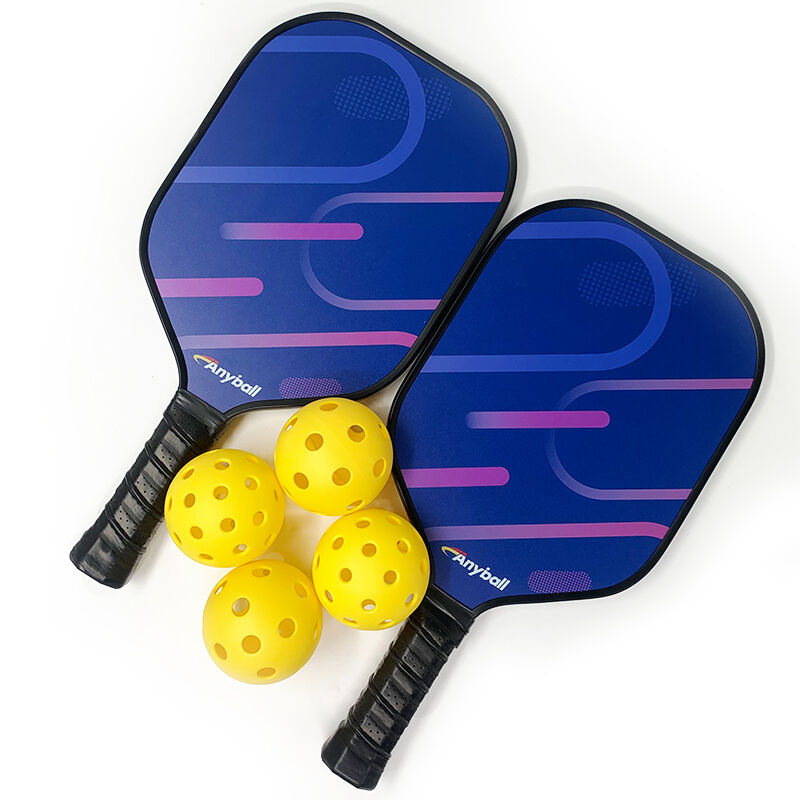
Selecting the right pickleball ball for tournament play is one of the most consequential decisions a player, coach, or event organizer can make. Unlike recreational play where any ball will do, tournament conditions demand a pickleball ball that meets strict performance standards, holds up under extended match play, and behaves consistently across every rally. The wrong choice can affect spin response, bounce predictability, and even player safety — all of which matter enormously when competitive outcomes are on the line.
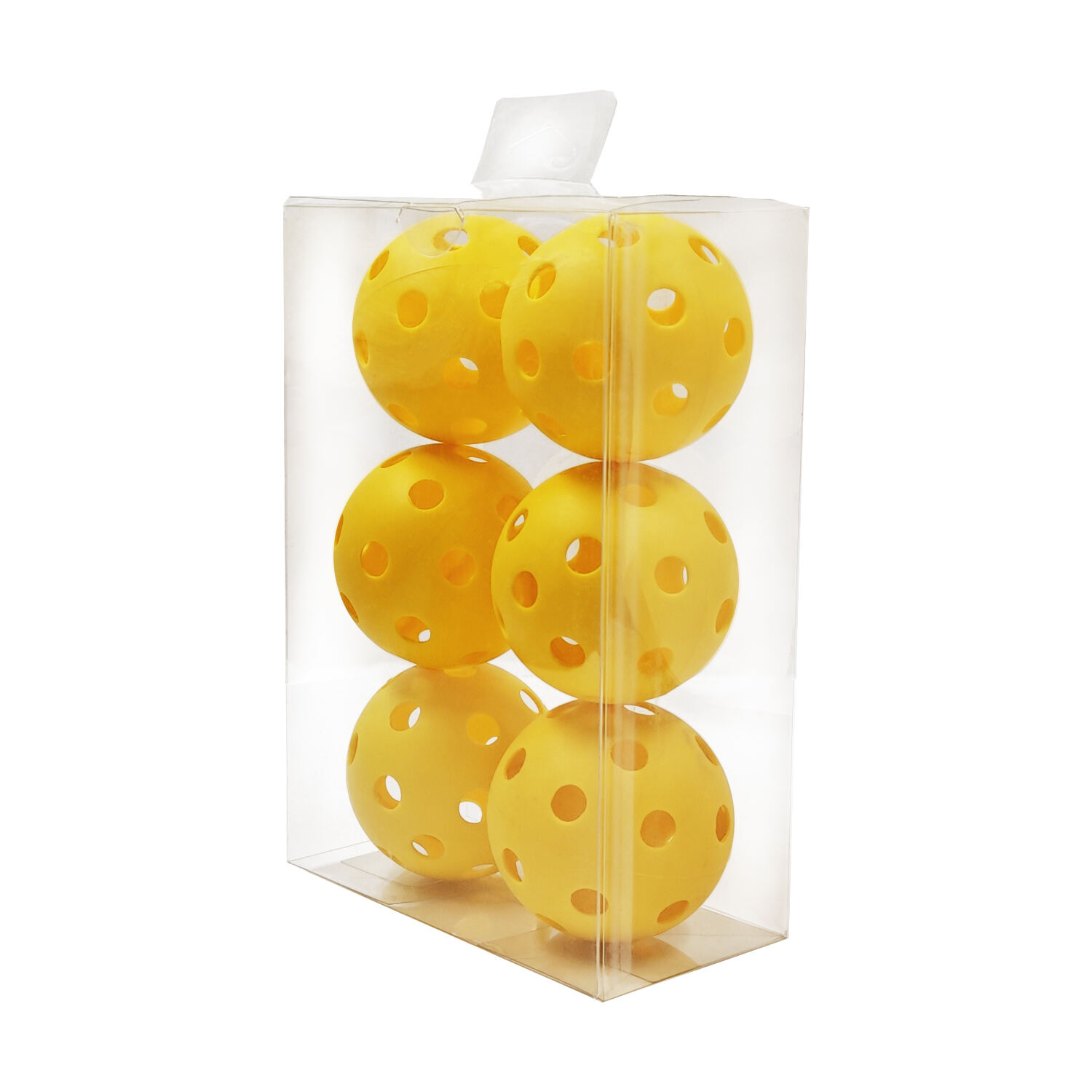
Understanding what separates a tournament-grade pickleball ball from a standard recreational one requires looking at several interconnected factors: material composition, hole count and pattern, hardness, weight tolerance, surface texture, and environmental suitability. Each of these elements plays a direct role in how the pickleball ball performs during high-stakes competition. This article breaks down every key factor so that players and organizers can make informed, confident decisions when sourcing balls for sanctioned events.
Material Composition and Its Impact on Performance
Why Polymer and PE Materials Dominate Tournament Play
The material used to manufacture a pickleball ball is the single most influential factor in its overall performance profile. Most tournament-approved balls are made from a hard polymer or polyethylene (PE) compound, both of which offer the rigidity needed for consistent bounce and the durability required to survive extended match play. Softer plastics tend to deform under repeated impact, leading to unpredictable flight paths and shortened lifespan — neither of which is acceptable in a competitive setting.
PE-material pickleball balls have gained significant traction in professional and sanctioned tournament circuits because they strike an effective balance between hardness and impact resistance. A pickleball ball made from quality PE compound resists cracking under cold conditions better than some older polymer formulations, making it a more versatile choice for both indoor and outdoor tournament environments. The molecular density of the material also affects how the ball responds to paddle contact, influencing spin generation and control at the net.
When evaluating material quality, organizers should look for balls that have passed standardized compression and drop tests. A tournament-grade pickleball ball should rebound to a consistent height from a defined drop distance, and that rebound should remain stable across multiple impacts. Material degradation that causes the ball to soften mid-match is a disqualifying characteristic for serious competition use.
Surface Texture and Its Role in Spin and Control
Beyond the core material, the surface finish of a pickleball ball directly affects how players can manipulate it during play. A slightly textured surface allows paddle strings and paddle face materials to grip the ball momentarily, enabling topspin, backspin, and sidespin shots that are central to advanced tournament strategy. A ball that is too smooth reduces spin potential and flattens the tactical range available to skilled players.
Tournament organizers should verify that the surface texture of any candidate pickleball ball is uniform across the entire sphere. Inconsistent texture — whether from manufacturing variation or post-production handling — creates unpredictable spin behavior that disadvantages players who rely on precision shot-making. A quality pickleball ball will have a matte or lightly stippled finish that is consistent from seam to seam.
Surface texture also interacts with environmental conditions. Outdoor courts expose the pickleball ball to wind, humidity, and abrasive surfaces, all of which gradually wear down the texture. Choosing a ball with a durable surface coating or a material that retains its texture under friction is especially important for multi-day outdoor tournaments where the same ball may be used across several games.
Hole Count, Pattern, and Aerodynamic Consistency
The Standard of 40 Holes in Tournament Balls
One of the most recognizable specifications of a tournament pickleball ball is its hole count. The 40-hole configuration has become the dominant standard for outdoor tournament play, and it is the format approved by major governing bodies for sanctioned competition. The 40-hole pattern is engineered to produce stable, predictable flight characteristics even in moderate wind conditions, which is critical when matches are played on exposed outdoor courts.
The distribution of holes across the surface of a pickleball ball is not arbitrary. Manufacturers use precise geometric patterns to ensure that aerodynamic drag is balanced across all axes of rotation. An unevenly distributed hole pattern causes the ball to drift or wobble in flight, introducing an element of randomness that undermines the skill-based nature of tournament competition. When sourcing balls for an event, organizers should confirm that the hole pattern meets the specifications outlined by the relevant sanctioning body.
It is also worth noting that hole diameter matters alongside hole count. Holes that are too large reduce structural integrity and make the pickleball ball more susceptible to cracking under hard impacts. Holes that are too small restrict airflow and alter the ball's flight arc in ways that experienced players will immediately notice. A well-engineered 40-hole pickleball ball achieves the right balance between structural strength and aerodynamic performance.
Indoor vs. Outdoor Hole Configurations
While 40-hole balls are standard for outdoor tournaments, indoor tournament play sometimes uses balls with a different hole count — typically 26 holes — which are designed for the controlled airflow conditions of an enclosed gymnasium. The larger holes in a 26-hole pickleball ball reduce aerodynamic resistance in still-air environments, producing a slightly softer, slower game that suits indoor court surfaces and lighting conditions.
Tournament directors must match the pickleball ball specification to the venue type. Using an outdoor ball in an indoor setting produces a faster, harder game that can feel uncontrolled, while using an indoor ball outdoors results in erratic flight behavior in any wind. This distinction is not merely a preference — it is a performance and fairness issue that directly affects match quality.
For multi-venue tournaments that span both indoor and outdoor courts, having separate approved ball inventories for each environment is the professional standard. Clearly labeling and segregating indoor and outdoor pickleball ball stock prevents mix-ups that could compromise match integrity.
Weight, Size Tolerances, and Official Approval Standards
Understanding Weight Specifications for Competitive Play
The weight of a pickleball ball is tightly regulated for tournament use. Governing bodies specify an acceptable weight range — typically between 0.78 and 0.935 ounces — and any ball falling outside this range is ineligible for sanctioned play. Weight affects how the ball responds to paddle impact, how far it travels per unit of force, and how it behaves in wind. A heavier pickleball ball tends to cut through wind more effectively but requires more paddle power to drive deep into the court.
Consistency within a batch of tournament balls is just as important as meeting the weight specification. If different balls in the same match inventory vary significantly in weight, players will notice inconsistent performance between rallies, which introduces an unfair variable into competition. Reputable manufacturers maintain tight weight tolerances across production runs, and tournament organizers should request batch-level quality documentation when sourcing balls for major events.
Weight also interacts with material density. A pickleball ball made from a denser PE compound may achieve the target weight with thinner walls, which can affect durability. Conversely, a ball with thicker walls made from a lighter material may feel more solid on impact but could be marginally heavier. Understanding this relationship helps buyers evaluate whether a ball's weight specification reflects genuine engineering quality or simply a material trade-off.
Diameter Tolerances and Roundness Requirements
A tournament pickleball ball must fall within a specified diameter range — generally between 2.87 and 2.97 inches — and must be as close to perfectly round as manufacturing precision allows. Deviation from roundness, even by a fraction of a millimeter, causes the ball to bounce at inconsistent angles and travel on unpredictable flight paths. This is why roundness testing is a standard part of the approval process for any ball seeking tournament certification.
Manufacturers achieve roundness through precision molding processes that apply uniform pressure across the entire ball surface during formation. Lower-quality production methods can result in slight flattening or elongation that is invisible to the naked eye but measurable with calipers — and noticeable to experienced players during match play. When evaluating a pickleball ball for tournament use, requesting roundness test data from the manufacturer is a reasonable and professional step.
Diameter consistency also affects how the ball interacts with the court surface on bounces. A ball that is slightly larger than specification will bounce higher than expected, while a slightly undersized pickleball ball will produce a lower, faster bounce. Both deviations disrupt the tactical expectations of players who have trained extensively with properly sized equipment.
Durability, Crack Resistance, and Tournament Longevity
How Crack Resistance Affects Tournament Reliability
One of the most common failure modes for a pickleball ball in tournament conditions is cracking. Hard impacts, cold temperatures, and repeated stress cycles all contribute to micro-fractures that eventually cause the ball to split along the seam or across the surface. A cracked ball must be replaced immediately, and in a tournament setting, frequent ball changes disrupt match flow and increase equipment costs for organizers.
Crack resistance is primarily a function of material quality and wall thickness. PE-material balls with optimized wall geometry distribute impact stress more evenly across the surface, reducing the likelihood of localized fracture. Balls that use lower-grade plastic compounds or inconsistent wall thickness are significantly more prone to cracking, particularly in cold-weather outdoor tournaments where the material becomes more brittle.
Tournament organizers planning events in cooler climates should specifically source a pickleball ball rated for low-temperature performance. Some manufacturers conduct cold-weather impact testing and can provide data on crack resistance at specific temperature thresholds. This information is directly relevant to event planning and should be part of the procurement conversation.
Evaluating Lifespan Across Multiple Match Cycles
Beyond crack resistance, the overall lifespan of a pickleball ball across multiple match cycles is a practical concern for tournament budgeting and logistics. A ball that degrades rapidly — losing its roundness, surface texture, or bounce consistency after just a few games — creates both a performance problem and a cost problem. High-quality tournament balls should maintain their approved performance characteristics across a reasonable number of match cycles before requiring replacement.
Durability testing typically involves subjecting a pickleball ball to a defined number of machine-driven impacts and then re-measuring its weight, diameter, roundness, and bounce height. Balls that retain their specifications after this stress testing are considered suitable for tournament use. Organizers should ask suppliers whether their products have undergone this type of lifecycle testing and request the results as part of the sourcing process.
It is also worth factoring in the court surface when assessing durability. Rough concrete or asphalt outdoor courts are significantly more abrasive than smooth indoor gymnasium floors, and a pickleball ball used on outdoor surfaces will wear faster regardless of material quality. Matching ball specification to court surface type is a practical durability strategy that experienced tournament directors routinely apply.
Approval Status and Compliance with Governing Body Standards
Why Official Approval Is Non-Negotiable for Sanctioned Events
For any sanctioned tournament, the pickleball ball used must appear on the approved equipment list maintained by the relevant governing body. Using a non-approved ball — even one that appears to meet all physical specifications — can result in the event losing its sanctioned status, which has serious consequences for player rankings, prize eligibility, and organizational credibility. Approval status is therefore a baseline requirement, not an optional quality indicator.
Governing bodies approve specific pickleball ball models after rigorous testing against their published specifications. This process evaluates weight, diameter, roundness, bounce height, hardness, and hole configuration. A ball that passes all these tests earns approval for a defined period, after which it must be re-evaluated if the manufacturer makes any changes to materials or production processes. Organizers should verify that the approval status of their chosen ball is current and has not lapsed.
Approval status also signals a level of manufacturer accountability. Companies that invest in the approval process are demonstrating a commitment to consistent quality and compliance with industry standards. This is a meaningful differentiator when comparing pickleball ball options for tournament procurement, particularly when sourcing from manufacturers who offer factory-direct pricing.
Matching Ball Specifications to Tournament Level and Format
Not all tournaments operate at the same competitive level, and the pickleball ball specification appropriate for a local club event may differ from what is required for a regional or national championship. Higher-level events typically enforce stricter compliance with governing body standards and may specify particular approved models rather than simply requiring any approved ball. Understanding the specific requirements of the tournament format being organized is essential before finalizing ball procurement.
Format also matters. Doubles play and singles play can produce different wear patterns on a pickleball ball because of differences in rally length, shot velocity, and court coverage. Some tournament directors choose to rotate balls more frequently in singles events where the pace of play is higher and individual balls absorb more impact per unit of time. Building this rotation logic into event planning ensures that ball performance remains consistent throughout the competition.
For multi-day tournaments, having a sufficient inventory of approved pickleball ball stock — with a planned replacement schedule — is a logistical necessity. Underestimating ball consumption is a common mistake that can force organizers to use degraded equipment in later rounds, compromising the quality of the most important matches in the draw.
FAQ
What is the difference between an indoor and outdoor pickleball ball?
An indoor pickleball ball typically has 26 larger holes and is made from a softer plastic, producing a slower, more controlled game suited to gymnasium conditions. An outdoor pickleball ball usually has 40 smaller holes and is made from a harder, more durable material designed to handle wind, rough court surfaces, and temperature variation. Using the correct type for the venue is essential for consistent, fair tournament play.
How many holes should a tournament pickleball ball have?
For outdoor tournament play, the standard is 40 holes, which is the configuration approved by major governing bodies for sanctioned competition. The 40-hole pattern provides the aerodynamic stability needed for consistent flight in outdoor conditions. Indoor tournaments may use 26-hole balls, but organizers should always verify the specific requirements of the sanctioning body overseeing their event.
How do I know if a pickleball ball is approved for tournament use?
Check the approved equipment list published by the relevant governing body, such as USA Pickleball or the International Federation of Pickleball. Approved balls are listed by manufacturer and model name. Always verify that the approval is current, as approvals can lapse if a manufacturer changes materials or production methods without re-submitting the product for testing.
How often should tournament balls be replaced during an event?
There is no universal rule, but most tournament directors replace a pickleball ball when it shows visible cracking, significant loss of roundness, or a noticeable change in bounce behavior. In high-pace formats like singles play, balls may need replacement more frequently than in doubles. Having a planned rotation schedule and sufficient inventory on hand ensures that ball quality remains consistent from the first round to the final.