EN
EN


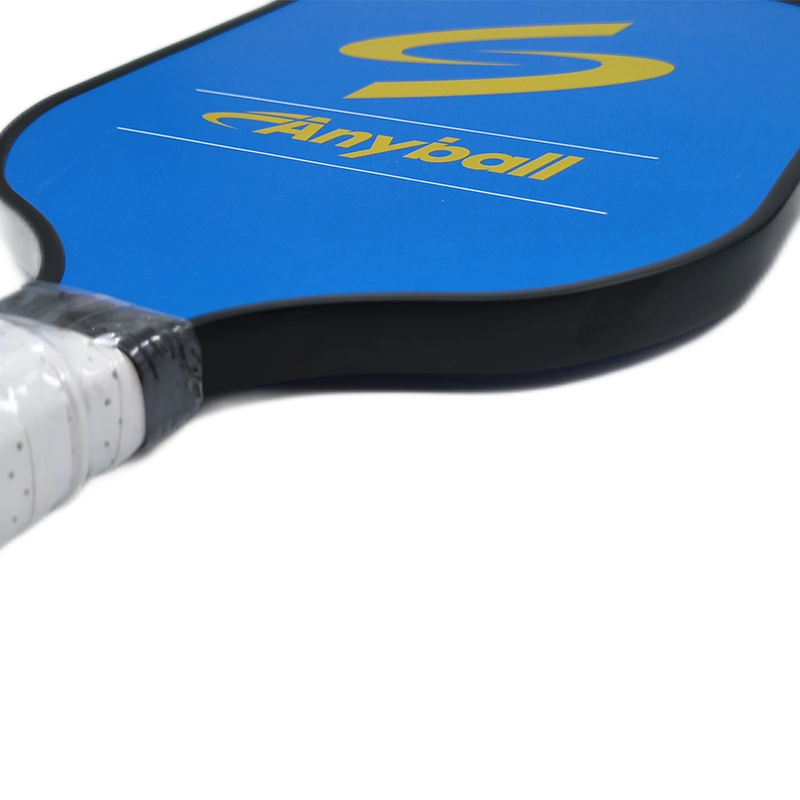
The evolution of pickleball equipment has reached a significant milestone with the arrival of the gen 4 pickleball paddle, a design that fundamentally changes how players generate power and maintain shot accuracy on the court. Unlike earlier generations that relied on simpler core constructions and basic surface materials, the gen 4 pickleball paddle integrates advanced thermoforming technology, premium carbon fiber faces, and engineered foam edge systems to deliver a measurable performance upgrade. Whether you are a competitive player seeking an edge in tournament play or a serious recreational athlete looking to elevate your game, understanding how this paddle achieves its performance gains is essential before making an equipment decision.
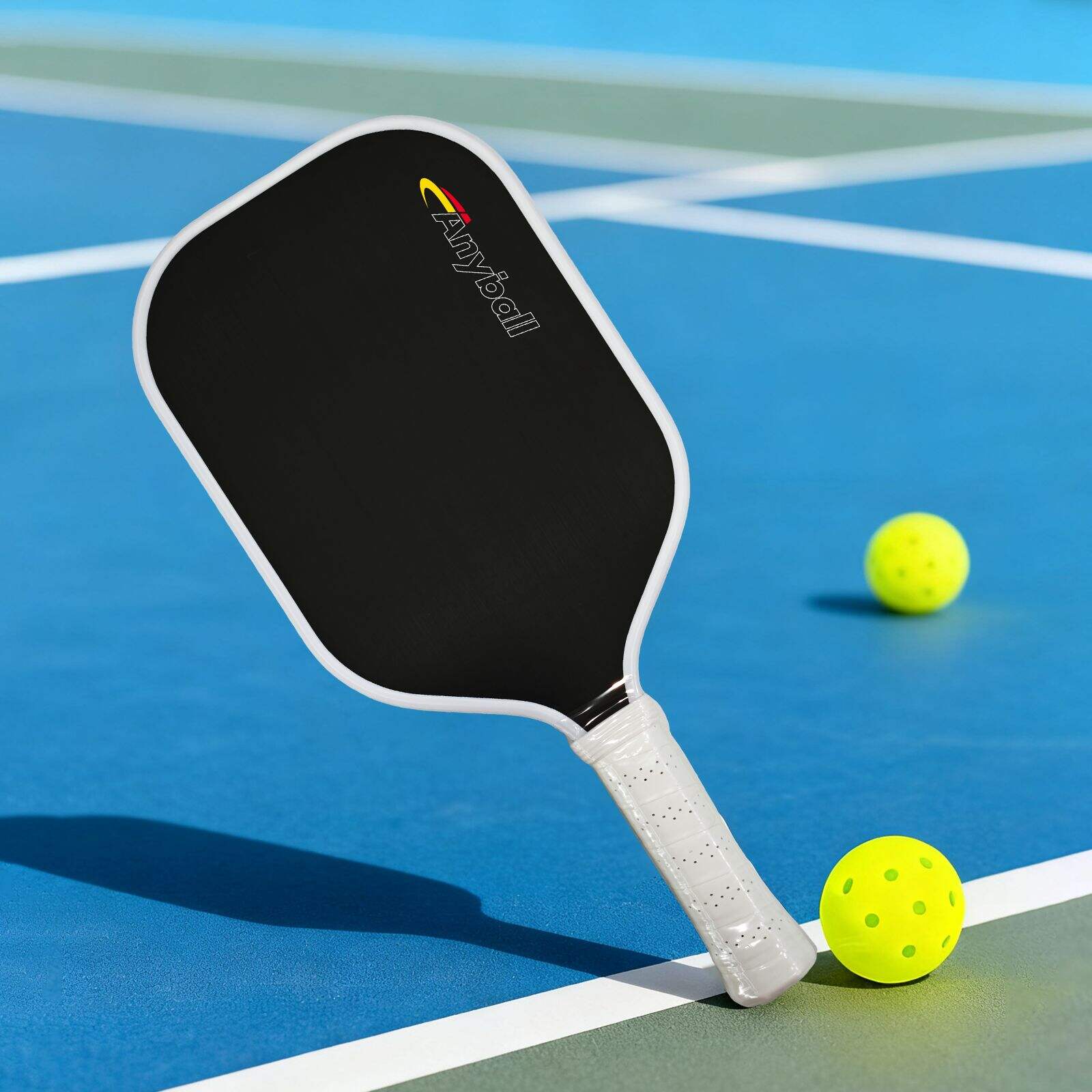
The gen 4 pickleball paddle represents a convergence of material science and biomechanical engineering. Its construction is not simply an incremental refinement — it is a rethinking of how each component contributes to ball speed, spin, dwell time, and directional control. From the Toray T700 carbon fiber surface to the EVA foam edge reinforcement and the precision-tuned polymer core, every element of the gen 4 pickleball paddle is designed to work in concert. This article breaks down the specific mechanisms behind its power and accuracy enhancements so players and buyers can make fully informed decisions.
The Role of Thermoforming Technology in the Gen 4 Pickleball Paddle
What Thermoforming Does to Paddle Structure
Thermoforming is the manufacturing process that sets the gen 4 pickleball paddle apart from conventionally constructed paddles. In a thermoformed paddle, heat and pressure are applied to bond the carbon fiber face directly to the core material, creating a unified, seamless structure rather than a layered assembly held together by adhesives alone. This process eliminates the micro-gaps and delamination risks that can develop in traditionally glued paddles over time, especially under the stress of repeated high-impact shots.
The result is a paddle body that behaves as a single integrated unit. When the ball makes contact with the face of the gen 4 pickleball paddle, energy transfer is more direct and consistent because there are no weak bonding layers to absorb or scatter that energy unpredictably. Players notice this as a crisper, more responsive feel — the kind of feedback that allows for precise shot calibration during fast exchanges at the kitchen line.
Thermoforming also allows for tighter dimensional tolerances across the paddle face. This means the sweet spot — the area of the paddle that delivers optimal power and control — is larger and more consistent from edge to edge on a gen 4 pickleball paddle compared to earlier construction methods. A larger effective sweet spot directly translates to more reliable accuracy, particularly on off-center hits that would cause mishits on older paddle designs.
Structural Integrity Under Competitive Conditions
Competitive pickleball involves thousands of high-velocity impacts per session. The thermoformed construction of the gen 4 pickleball paddle is specifically engineered to maintain its structural integrity under these repeated stresses. Traditional paddles can develop internal separation between the face and core over time, which gradually degrades both power output and shot consistency. The thermoformed bond in the gen 4 pickleball paddle resists this degradation, meaning performance characteristics remain stable across the paddle's lifespan.
This durability factor is particularly relevant for players who train frequently or compete in multi-day tournaments. The gen 4 pickleball paddle does not just perform well when new — it is engineered to sustain that performance level through extended use. For buyers evaluating long-term value, this structural resilience is a critical differentiator.
Toray T700 Carbon Fiber and Its Impact on Power Generation
Why T700 Carbon Fiber Matters for a Pickleball Paddle
The surface material of a pickleball paddle is the primary interface between the player's swing energy and the ball. The gen 4 pickleball paddle uses Toray T700 carbon fiber, a high-tensile aerospace-grade material known for its exceptional stiffness-to-weight ratio. T700 carbon fiber is significantly stiffer than fiberglass or lower-grade carbon materials, which means it deflects less upon ball impact and returns more energy back into the shot.
In practical terms, this stiffness translates directly into power. When a player drives the ball with a gen 4 pickleball paddle, the T700 face does not flex and absorb energy the way a softer surface would. Instead, it acts more like a rigid launching platform, propelling the ball with greater velocity for the same swing effort. This is why players transitioning from fiberglass paddles to the gen 4 pickleball paddle often report noticeably increased ball speed without needing to swing harder.
Beyond raw power, T700 carbon fiber also contributes to spin generation. The textured surface of the carbon fiber face creates micro-friction with the ball's surface during contact, allowing players to impart topspin, backspin, and sidespin with greater effectiveness. Spin is a critical accuracy tool in advanced pickleball — it allows players to hit aggressive shots that still land within bounds and bounce in controlled directions. The gen 4 pickleball paddle's T700 surface enhances this spin capability meaningfully.
Weight Distribution and Swing Dynamics
Carbon fiber's low density allows paddle designers to achieve a favorable weight distribution in the gen 4 pickleball paddle without adding bulk. The paddle can be engineered to place more mass toward the head for power-oriented play or balanced more centrally for control-oriented play, all while keeping the overall weight within a range that does not fatigue the player's arm during extended sessions.
The gen 4 pickleball paddle is available in both 14mm and 16mm core thickness variants, which further allows players to tune the weight and feel to their playing style. The 14mm version offers a slightly firmer, faster response suited to power players, while the 16mm version provides a softer feel with enhanced dwell time, giving control-oriented players more time to direct the ball precisely. This flexibility in specification is a direct result of the carbon fiber construction enabling precise engineering of the paddle's physical characteristics.
EVA Foam Edge Technology and Accuracy Enhancement
How EVA Foam Edges Redefine the Paddle's Perimeter
One of the most distinctive structural features of the gen 4 pickleball paddle is its EVA foam edge system. Traditional paddles use rigid edge guards made from plastic or composite materials, which serve primarily as protective bumpers. The EVA foam edges on the gen 4 pickleball paddle serve a fundamentally different purpose — they act as a vibration-dampening and energy-management system around the paddle's perimeter.
When a ball strikes near the edge of a conventional paddle, the rigid guard creates a harsh, unpredictable rebound that is difficult to control. The EVA foam edges of the gen 4 pickleball paddle absorb and redistribute that impact energy more smoothly, resulting in a more consistent response even on shots that catch the paddle's outer zones. This effectively extends the usable hitting area of the paddle, giving players more confidence to attack balls that would otherwise be risky edge shots.
The foam's density and compression characteristics are carefully calibrated in the gen 4 pickleball paddle to balance energy absorption with responsiveness. Too soft, and the edge would kill power on perimeter shots. Too firm, and it would not provide the dampening benefit. The engineered EVA compound used in the gen 4 pickleball paddle strikes this balance, ensuring that edge shots retain enough pace to be effective while gaining the consistency needed for accurate placement.
Vibration Control and Player Feedback
Vibration management is closely tied to both accuracy and player comfort. Excessive vibration after ball contact creates noise in the tactile feedback a player receives, making it harder to develop a precise sense of how the paddle is responding to different shot types. The EVA foam edges of the gen 4 pickleball paddle significantly reduce post-impact vibration, giving players cleaner, more informative feedback on each shot.
This cleaner feedback loop accelerates skill development. Players can more quickly learn to distinguish between a well-struck shot and a slightly mistimed one, allowing for faster in-game adjustments. Over time, this translates into measurably improved shot accuracy, particularly in high-pressure situations where fine motor control is critical. The gen 4 pickleball paddle's vibration management is therefore not just a comfort feature — it is a performance feature with direct implications for accuracy.
Additionally, reduced vibration lowers the cumulative stress on a player's wrist, elbow, and shoulder during long sessions. This ergonomic benefit means players can maintain their technique and focus for longer without fatigue-induced accuracy degradation, which is a meaningful advantage in tournament settings where matches can extend over several hours.
Core Construction and the Power-Control Balance
Polymer Core Engineering in the Gen 4 Pickleball Paddle
The core of the gen 4 pickleball paddle uses a high-performance polymer honeycomb structure that is central to its power-control balance. The honeycomb geometry provides a high strength-to-weight ratio while creating a consistent compression response across the entire paddle face. This uniformity is critical for accuracy — players need to know that the paddle will respond the same way whether they hit the center or slightly off-center.
The polymer core in the gen 4 pickleball paddle is engineered to provide a specific dwell time — the brief moment the ball remains in contact with the paddle face during a shot. Longer dwell time gives players more control over shot direction and spin, while shorter dwell time favors raw power and speed. The core thickness options of 14mm and 16mm allow players to select the dwell time profile that matches their game, making the gen 4 pickleball paddle adaptable to different playing styles without compromising the core's structural integrity.
How Core and Face Work Together for Shot Precision
The interaction between the T700 carbon fiber face and the polymer core is where the gen 4 pickleball paddle's accuracy advantage becomes most apparent. The stiff carbon face initiates a rapid, clean energy transfer into the core, which then compresses and rebounds in a controlled, predictable manner. This two-stage energy exchange gives the player a consistent shot response that can be reliably reproduced across different shot types and speeds.
In contrast, paddles with mismatched face and core stiffness profiles can produce inconsistent responses — a shot that feels right one moment may behave differently the next due to variable energy absorption patterns. The gen 4 pickleball paddle's thermoformed construction ensures that the face and core are permanently bonded in a way that maintains their engineered interaction throughout the paddle's life, preserving shot consistency over time.
This consistency is particularly valuable for players who rely on placement-based strategies rather than pure power. When a player can trust that the gen 4 pickleball paddle will respond identically on every third-shot drop or cross-court dink, they can commit fully to their shot selection without second-guessing the equipment. That mental confidence is itself a performance enhancer that should not be underestimated.
USAPA Certification and Competitive Relevance
What USAPA Certification Means for the Gen 4 Pickleball Paddle
The gen 4 pickleball paddle carries USAPA certification, which confirms that it meets the official standards set by USA Pickleball for use in sanctioned competitive play. This certification is not merely a formality — it involves rigorous testing of the paddle's dimensions, surface texture, core composition, and deflection characteristics to ensure compliance with the rules of the sport.
For competitive players, USAPA certification is a non-negotiable requirement. Using a non-certified paddle in a sanctioned tournament results in disqualification, regardless of the paddle's performance qualities. The gen 4 pickleball paddle's certification means players can invest in its advanced technology with confidence that it will be accepted at every level of competitive play, from local club tournaments to national championship events.
Beyond eligibility, USAPA certification also serves as an independent quality benchmark. The testing process validates that the gen 4 pickleball paddle's performance characteristics — including its surface texture for spin generation and its core response for power — fall within the parameters that define fair and consistent competitive play. This gives buyers an additional layer of assurance about the paddle's engineering quality.
Choosing Between 14mm and 16mm for Your Playing Style
The gen 4 pickleball paddle is offered in both 14mm and 16mm core thickness, and this choice has a direct impact on how the paddle enhances power versus accuracy for individual players. The 14mm core produces a firmer, more responsive feel with a slightly faster ball exit speed, making it well-suited for aggressive baseliners and players who prioritize driving power in their game. The reduced dwell time of the thinner core rewards players with fast, decisive swings.
The 16mm core of the gen 4 pickleball paddle offers a softer feel with increased dwell time, which gives players more opportunity to shape their shots and apply spin. This version is typically preferred by players who emphasize the soft game — dinking, drop shots, and precise placement — where control and touch are more important than raw power. The additional thickness also contributes to slightly better vibration absorption, enhancing the tactile feedback quality discussed earlier.
Neither option is universally superior — the right choice depends on the player's style, skill level, and the specific aspects of their game they want to develop. What both versions share is the same thermoformed construction, T700 carbon fiber face, EVA foam edges, and USAPA certification that define the gen 4 pickleball paddle's performance identity.
FAQ
What makes the gen 4 pickleball paddle different from earlier paddle generations?
The gen 4 pickleball paddle introduces thermoforming technology, Toray T700 carbon fiber faces, and EVA foam edge systems that were not present in earlier generations. These advances work together to improve energy transfer efficiency, expand the effective sweet spot, reduce vibration, and enhance shot consistency in ways that conventional construction methods cannot replicate.
Is the gen 4 pickleball paddle suitable for beginner players?
While the gen 4 pickleball paddle is engineered with competitive performance in mind, its larger sweet spot and vibration-dampening properties also benefit developing players. Beginners who invest in a gen 4 pickleball paddle will find that its forgiving response on off-center hits and its clean tactile feedback accelerate skill development compared to entry-level paddles with less refined construction.
How does the EVA foam edge system affect the durability of the gen 4 pickleball paddle?
The EVA foam edges of the gen 4 pickleball paddle provide both performance and protective benefits. They cushion the paddle's perimeter against the impact of court contact — a common cause of edge damage in competitive play — while also managing vibration during ball strikes. This dual function means the foam edges contribute to the paddle's long-term structural integrity as well as its in-game performance.
Does the gen 4 pickleball paddle require any special maintenance?
The gen 4 pickleball paddle does not require specialized maintenance beyond standard paddle care practices. Keeping the carbon fiber face clean from dirt and oils using a damp cloth preserves the surface texture that enables spin generation. Avoiding prolonged exposure to extreme heat — such as leaving the paddle in a hot car — protects the thermoformed bond and EVA foam components. With basic care, the gen 4 pickleball paddle is designed to maintain its performance characteristics over an extended service life.