EN
EN



When you step onto an outdoor court, the conditions you face are nothing like what you encounter indoors. Wind, heat, rough asphalt, and direct sunlight all place unique demands on your equipment — and the pickleball ball you choose is no exception. Understanding what a pickleball ball is actually made of, and why those material choices matter for outdoor performance, is the first step toward making a smarter equipment decision.
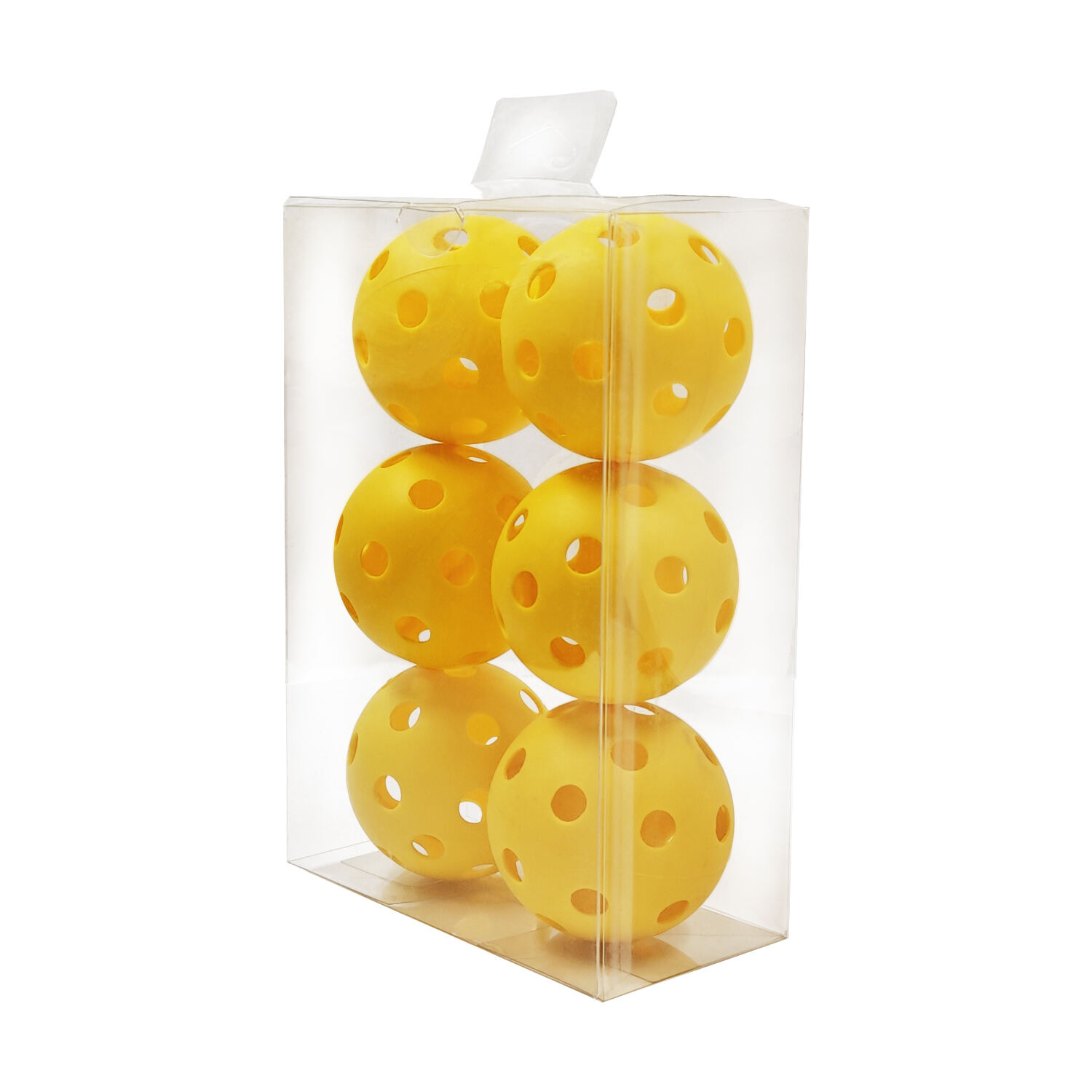
Not every pickleball ball is engineered for the same environment. Outdoor play introduces variables that demand a harder, more durable shell, a specific hole configuration, and a material composition that resists warping under temperature swings. This article breaks down exactly which materials define a high-performing outdoor pickleball ball, why those materials are chosen, and what physical properties you should look for when selecting one for serious outdoor use.
The Role of Material in Outdoor Pickleball Ball Performance
Why Material Choice Is the Foundation of Ball Quality
The material of a pickleball ball determines nearly every performance characteristic that matters outdoors — hardness, bounce consistency, crack resistance, and aerodynamic stability. Unlike indoor courts with controlled climates, outdoor surfaces are abrasive and unforgiving. A ball that performs beautifully on a smooth gymnasium floor may crack, deform, or lose its round shape within a few sessions on a rough concrete or asphalt court.
Material science is not a secondary concern for pickleball ball manufacturers targeting outdoor use. It is the primary engineering challenge. The shell must be rigid enough to maintain shape under repeated high-velocity impacts, yet not so brittle that it shatters in cold weather. Achieving that balance requires careful selection of polymer compounds and precise manufacturing tolerances.
When players and coaches evaluate a pickleball ball for outdoor use, they are ultimately evaluating the material decisions made during product development. Every other feature — hole count, diameter, weight — flows from the base material properties.
How Outdoor Conditions Stress the Ball Material
Outdoor courts expose a pickleball ball to a range of stressors that accelerate material fatigue. UV radiation from direct sunlight degrades certain polymers over time, causing surface brittleness and color fading. Temperature extremes — from cold morning sessions to hot afternoon play — cause materials to expand and contract, which can introduce micro-cracks in lower-quality shells.
Rough court surfaces also abrade the outer shell of a pickleball ball with every bounce. A material that lacks sufficient surface hardness will show visible wear quickly, which affects both aerodynamics and bounce predictability. Wind resistance is another factor: outdoor balls must maintain their trajectory in breezy conditions, which requires a consistent, smooth exterior that only high-quality materials can sustain over time.
Understanding these stressors helps explain why outdoor pickleball balls are engineered differently from their indoor counterparts, and why material selection is the most consequential decision in that engineering process.
Polyethylene and Hard Polymer Compounds in Outdoor Pickleball Balls
Polyethylene as a Core Material for Outdoor Use
Polyethylene, particularly high-density polyethylene (HDPE), is one of the most widely used base materials in outdoor pickleball ball construction. Its combination of impact resistance, chemical stability, and relatively low weight makes it well-suited for the demands of outdoor play. A pickleball ball made from PE material can absorb repeated impacts without cracking as readily as balls made from more brittle compounds.
PE-based pickleball balls also demonstrate good resistance to UV degradation compared to some alternative polymers. This means the ball retains its structural integrity and surface smoothness over a longer period of outdoor use. For players who train frequently outdoors or for facilities that go through high volumes of balls, this durability translates directly into lower replacement costs and more consistent play conditions.
The 40-hole design commonly used in outdoor pickleball balls pairs well with PE material because the harder shell maintains hole geometry under stress. Consistent hole shape is critical for predictable aerodynamics — if holes deform, the ball's flight path becomes erratic, which undermines competitive play.
Hard Polymer Blends and Their Advantages
Beyond pure polyethylene, many outdoor pickleball ball manufacturers use proprietary hard polymer blends that combine the toughness of PE with additives that improve UV stability, surface hardness, or low-temperature flexibility. These blends are formulated to address the specific weaknesses of single-compound materials — for example, adding flexibility agents to prevent cold-weather cracking while maintaining the hardness needed for outdoor bounce performance.
A well-formulated hard polymer pickleball ball will produce a faster, lower bounce compared to softer indoor balls. This is intentional. Outdoor courts are harder surfaces, and a softer ball would bounce unpredictably high. The harder polymer shell interacts with the court surface to produce a bounce height and speed that matches the expectations of competitive outdoor play.
The surface texture of a hard polymer pickleball ball also plays a role in how it interacts with paddle faces. A smooth, consistent surface allows for cleaner contact and more predictable spin response, which is especially important in competitive outdoor settings where players rely on precise shot-making.
Hole Configuration and Its Relationship to Material Hardness
The 40-Hole Standard for Outdoor Pickleball Balls
The number and size of holes in a pickleball ball are directly tied to the material's structural properties. Outdoor pickleball balls typically feature 40 holes, which are smaller and more numerous than the 26 holes found on indoor balls. This configuration reduces wind resistance and keeps the ball's flight path stable in outdoor conditions where air movement is a constant variable.
A harder material like PE is necessary to support the 40-hole design without compromising structural integrity. Each hole is a point of potential stress concentration — when the ball impacts a hard court surface, the forces distribute across the shell, and the areas around each hole must be strong enough to absorb those forces without cracking. Softer materials would deform around the holes under repeated impact, leading to premature failure.
This is why the material and hole configuration of an outdoor pickleball ball must be engineered together. A 40-hole ball made from an insufficiently hard material will not perform reliably outdoors, regardless of how well it is manufactured in other respects.
How Hole Geometry Affects Aerodynamic Consistency
The precision of hole drilling or molding in a pickleball ball directly affects its aerodynamic behavior. Holes that are not perfectly round, evenly spaced, or consistent in diameter will create asymmetric airflow around the ball, causing it to drift or wobble in flight. This is a material-dependent issue: harder, more dimensionally stable materials hold their hole geometry better over time and under thermal stress.
For outdoor play, where wind already introduces aerodynamic variability, a pickleball ball with inconsistent hole geometry compounds the problem significantly. Players may find it difficult to predict ball trajectory, which undermines the skill-based nature of the game. High-quality outdoor balls use materials that maintain tight dimensional tolerances throughout the ball's usable life.
Professional-grade outdoor pickleball balls are typically injection-molded in two halves and joined at a seam. The quality of that seam — which is also material-dependent — affects both aerodynamics and structural durability. A clean, flush seam on a hard polymer ball will perform more consistently than a raised or uneven seam on a lower-quality product.
Durability, Temperature Resistance, and Long-Term Performance
Material Behavior Across Temperature Ranges
One of the most practical material considerations for an outdoor pickleball ball is how it performs across a range of temperatures. In cold weather, many polymers become more brittle and are more likely to crack on impact. In hot weather, softer materials may deform slightly, affecting roundness and bounce consistency. The best outdoor pickleball balls use materials that maintain stable mechanical properties across a broad temperature window.
PE-based materials generally perform well in moderate temperature ranges, though very low temperatures can still increase brittleness. Some manufacturers address this by incorporating impact modifiers into their polymer blends, which improve cold-weather toughness without sacrificing the hardness needed for outdoor bounce performance. Players in regions with significant seasonal temperature variation should pay particular attention to this aspect of pickleball ball material specification.
Temperature also affects the internal air pressure of a pickleball ball, which influences bounce height and feel. A ball that is too soft in hot weather or too hard in cold weather will play differently than expected. Material selection that accounts for thermal expansion and contraction helps maintain consistent internal pressure and, therefore, consistent play characteristics across sessions.
Surface Wear Resistance and Court Compatibility
Outdoor courts — whether asphalt, concrete, or textured sport surfaces — are significantly more abrasive than indoor gymnasium floors. A pickleball ball used outdoors will experience surface abrasion with every bounce, and the rate at which the surface degrades depends directly on the material's hardness and wear resistance.
A pickleball ball with a high surface hardness rating will resist abrasion longer, maintaining its smooth exterior and consistent aerodynamic profile through more sessions of play. This is particularly important for facilities and clubs that use balls across multiple courts and sessions, where ball longevity has a direct impact on operational costs.
Surface wear also affects grip and spin. As the outer surface of a pickleball ball becomes rougher through abrasion, it interacts differently with paddle faces, potentially altering spin response and shot predictability. Choosing a ball made from a wear-resistant material helps ensure that play characteristics remain consistent from the first session to the last.
Selecting the Right Outdoor Pickleball Ball Based on Material
Key Material Properties to Evaluate
When evaluating an outdoor pickleball ball, the most important material properties to consider are hardness, impact resistance, UV stability, and thermal performance. Hardness determines bounce height and speed on hard court surfaces. Impact resistance determines how long the ball lasts before cracking. UV stability determines how well the ball holds up under prolonged sun exposure. Thermal performance determines consistency across different playing conditions.
A pickleball ball that scores well across all four of these material properties will deliver reliable, consistent performance in outdoor environments. Players should look for balls that specify their material composition — PE or hard polymer blends are generally strong indicators of outdoor suitability — and that meet recognized standards for weight, diameter, and bounce height.
It is also worth considering the manufacturing process. Injection-molded pickleball balls with clean seams and precise hole geometry are more likely to perform consistently than balls produced with less rigorous quality controls. Material quality and manufacturing precision work together to determine the final performance of the ball.
Matching Ball Material to Your Playing Context
Different outdoor playing contexts may favor slightly different material profiles. Competitive tournament players typically prefer a harder pickleball ball with a fast, low bounce that rewards precise shot-making. Recreational players may prefer a ball with slightly more give, which is more forgiving on off-center hits. Both preferences can be addressed through material selection, as polymer blends can be tuned to deliver different hardness and elasticity profiles.
Facilities that manage large inventories of pickleball balls should prioritize durability and consistency above all else. A pickleball ball that lasts longer and performs consistently across its lifespan reduces replacement frequency and ensures that all players on all courts are experiencing the same conditions. PE-based and hard polymer balls generally offer the best combination of these properties for high-volume outdoor use.
Ultimately, the best outdoor pickleball ball is the one whose material properties most closely match the demands of your specific playing environment, court surface, climate, and performance expectations. Material is not just a technical specification — it is the foundation of every shot you play.
FAQ
What is the best material for an outdoor pickleball ball?
Polyethylene (PE) and hard polymer blends are widely regarded as the most suitable materials for outdoor pickleball balls. These materials offer the hardness needed for consistent bounce on rough court surfaces, along with good impact resistance and UV stability. A pickleball ball made from PE material is particularly well-suited for outdoor play because it maintains its shape and surface quality through extended use on abrasive courts.
Why do outdoor pickleball balls have 40 holes instead of 26?
Outdoor pickleball balls use 40 smaller holes to reduce wind resistance and maintain stable flight in open-air conditions. The 26-hole design used on indoor balls allows more airflow, which is appropriate for the controlled indoor environment but would make the ball too susceptible to wind drift outdoors. The 40-hole configuration, combined with a harder material shell, gives the outdoor pickleball ball the aerodynamic stability needed for competitive outdoor play.
How does temperature affect outdoor pickleball ball performance?
Temperature affects both the material properties and the internal air pressure of a pickleball ball. In cold conditions, harder polymers can become more brittle and prone to cracking, while the ball may also feel harder and bounce differently. In hot conditions, softer materials may deform slightly, affecting roundness and consistency. High-quality outdoor pickleball balls use materials formulated to maintain stable performance across a broad temperature range, minimizing these effects.
How can I tell if a pickleball ball is designed for outdoor use?
The most reliable indicators are hole count, material specification, and hardness. An outdoor pickleball ball will typically have 40 holes, be made from a hard polymer or PE material, and have a noticeably firmer feel compared to an indoor ball. Many manufacturers also label their balls explicitly as 'outdoor' and specify the material composition. Checking for a clean, flush seam and consistent hole geometry is also a good indicator of a well-manufactured outdoor pickleball ball.
Table of Contents
- The Role of Material in Outdoor Pickleball Ball Performance
- Polyethylene and Hard Polymer Compounds in Outdoor Pickleball Balls
- Hole Configuration and Its Relationship to Material Hardness
- Durability, Temperature Resistance, and Long-Term Performance
- Selecting the Right Outdoor Pickleball Ball Based on Material
- FAQ